One thing that frequently crosses my mind is how to make nutrition simpler for you.
Changing habits in today’s world is tough with all the distractions and stress. Add in loads of conflicting nutrition advice, and it’s no surprise that many feel overwhelmed.
Yet, we can’t ignore the ongoing battle against chronic diseases, poor health, and issues with body weight and composition. Inaction isn’t a solution either.
Today, I’ll share two incredibly simple focus points.
We’re skipping macros and calorie counts for now. (Not that I’m against them, but they aren’t always the starting point.)
Forget about expensive supplements or pricey medications too.
Here They Are:
- Avoid Excessive Caloric Intake & Focus on Protein
- Increase Movement & Include Weight Lifting
If you need assistance with the second point, Our SQD5 training program has got you covered.
Let’s discuss how to manage the first point effectively and why it’s crucial.
Feeling Hungry Feels Unpleasant Relying on willpower alone is challenging—it’s tough to overcome our evolutionary wiring that drives us to eat when hungry.
Rather than fighting the urge to eat until full, we can achieve this more effectively by choosing the right foods.
For example, protein is key. Another helpful component is fiber. Foods rich in soluble fiber create a feeling of fullness by slowing down digestion and triggering hormone release that signals to your brain that you’re satisfied.
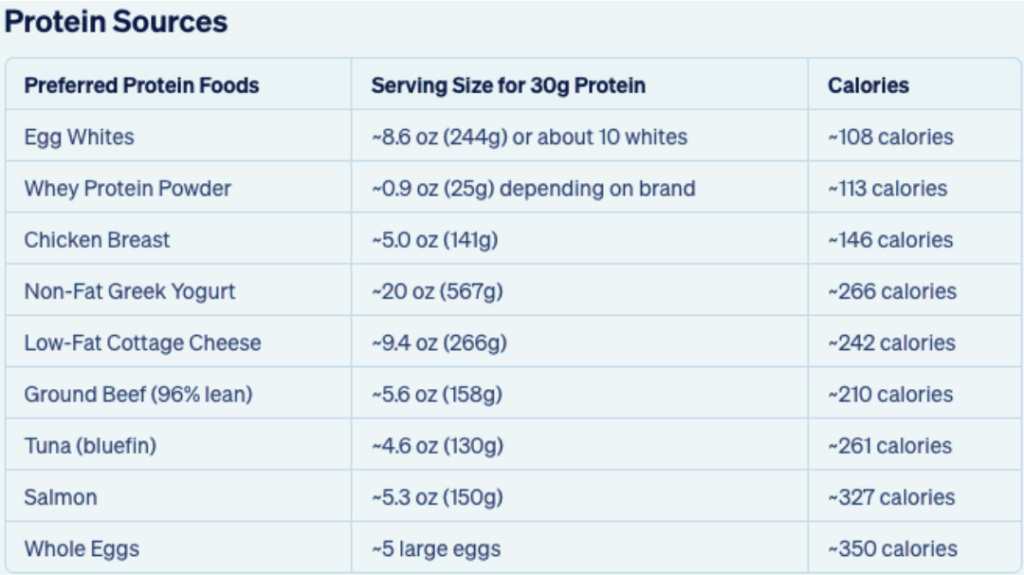
Protein & Fiber: Low-Calorie Options This chart offers more examples of how choosing the right protein sources can help manage overall calorie intake.
The same concept applies to fiber-rich foods and carbs. Bulky foods, like vegetables and fruits, fill you up more effectively, especially if they’re low in calories.
Foods with low energy density (fewer calories per volume) tend to be more filling. This explains why you can eat a big salad loaded with veggies and feel full, even with a low calorie count.
Conversely, high-energy-density foods are calorie-rich but nutrient-poor, promoting more fat storage and less muscle growth.
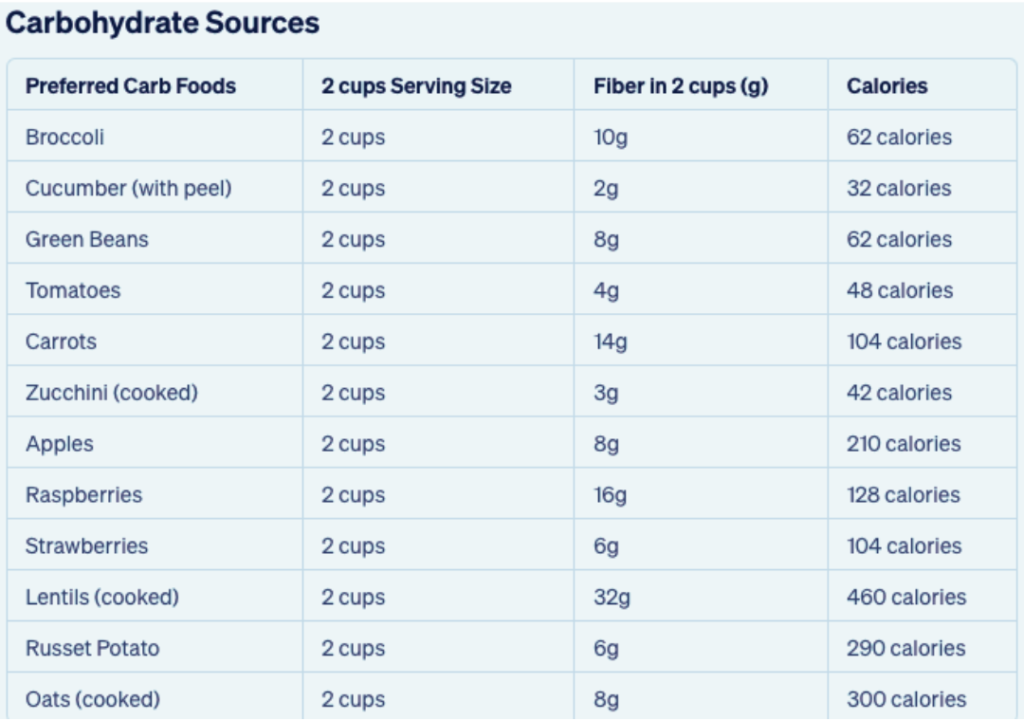
Take a look at these examples of nutrient content in 2 cups of food from various sources. Notice the significant differences in calorie amounts.
I’ve also noted the fiber content to show how choosing nutrient-dense, low-calorie, and high-fiber foods can dually benefit satiety.
Putting It All Together Remember, we’re aiming for simplicity here. You don’t need to get bogged down in the exact numbers of nutrients and calories.
Next time you’re grocery shopping, lean towards stocking up on lean proteins and fiber-rich foods that fill you up, and fewer high-calorie or low-density foods.
Life shouldn’t be about constant restriction. Focus on eating the best foods that allow you to feel full while staying within optimal calorie limits for muscle gain and minimal fat storage.
This is the key to consistently building or maintaining muscle without gaining excess body fat for years to come.